Behelp app
Making volunteering possible, even when you only have a few hours
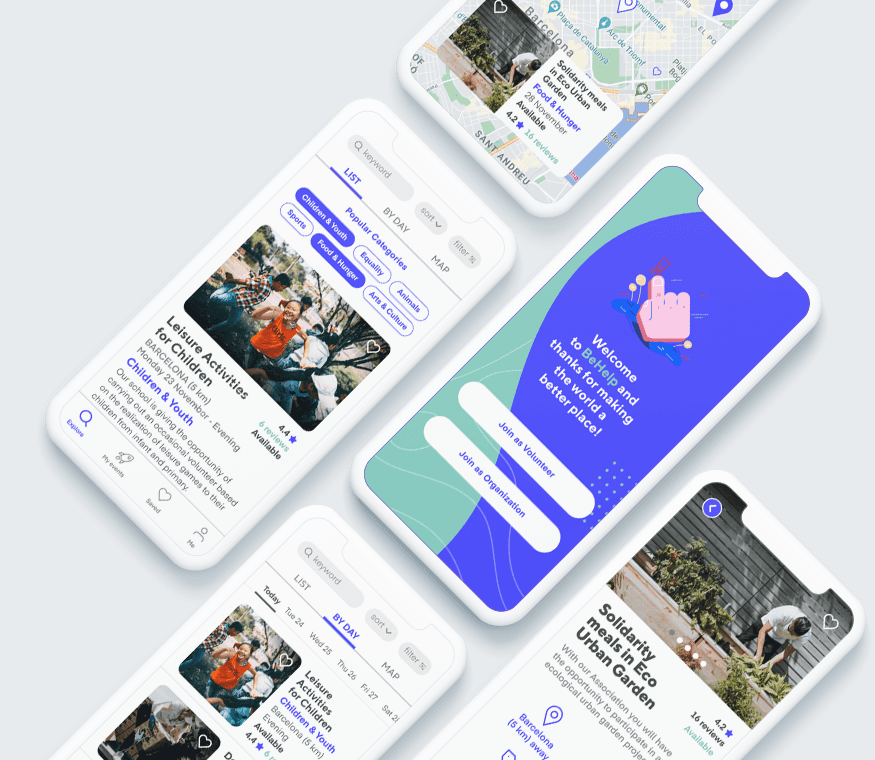
The opportunity
Volunteering often requires a significant time commitment. After taking part in projects around the world, I noticed a gap: there was no easy way to discover short-term volunteering opportunities for people who wanted to contribute but only had a few hours or days available.
I wanted to explore whether a digital platform could make these opportunities easier to discover and, at the same time, reduce the effort required for organisations to find reliable volunteers.
The initial concept focused on travellers, but research quickly revealed a broader opportunity: short-term volunteering could also make community participation more accessible to people in their own cities.
Understand the problem
I started by looking at both sides of the experience: volunteers and organisations.
I conducted 259 surveys with volunteers and organisations across different countries, followed by 6 interviews with people who had volunteered locally and while travelling, as well as organisations in Vietnam, Tanzania and Spain.
The research explored motivations, time commitment, discovery, trust and the challenges organisations face when recruiting volunteers.


Key insights
People volunteer more frequently in their local communities than when travelling.
There was no dedicated place to discover short-term volunteering opportunities.
Volunteers wanted enough information to make decisions without having to contact organisations first.
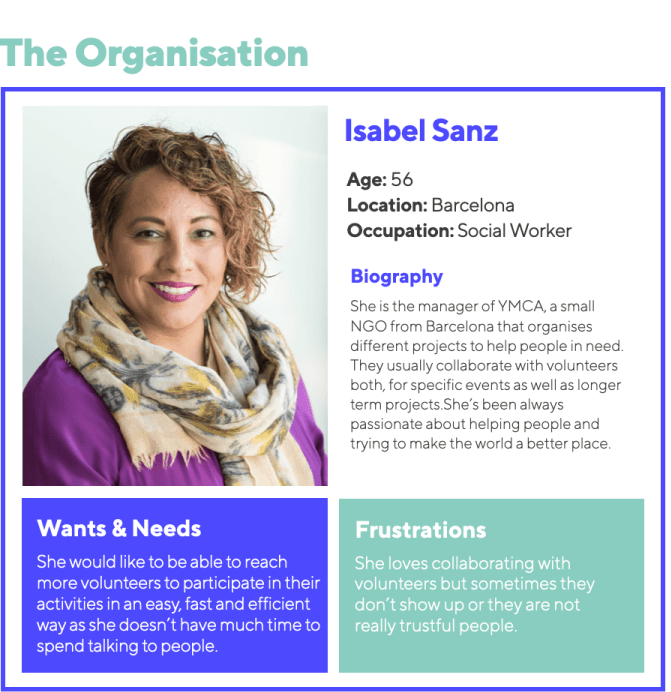
Organisations struggled with the time required to communicate with potential volunteers.
Reliability was a major concern for organisations, particularly when volunteers didn't show up.
Organisations in different contexts had very different needs, meaning the experience couldn't be designed around a single type of organisation.
One of the strongest insights came from speaking with travellers:
“Travellers don’t think to volunteer for a day as they don’t know this could be an option. If this was offered I’m sure they would be willing to participate in these projects.”
Mariana, Buenos Aires
These insights shifted the product from a simple volunteering directory into a two-sided platform focused on discovery, trust and reducing friction.
Defining the experience
The opportunity became:
How might we make it easy for people to discover and join short-term social projects that fit their interests, availability and location — while helping organisations find volunteers they can trust?
This led to two connected user experiences.
For volunteers
The experience needed to make opportunities easy to discover and evaluate, with clear information about:
What the activity involves
Where and when it takes place
What kind of help is needed
The organisation behind it
Whether the opportunity fits their preferences
The ability to join directly through the platform was particularly important. Volunteers shouldn't have to start a separate conversation with an organisation just to understand whether they could participate.
For organisations
The platform needed to make volunteer management simpler while creating confidence around who was applying.
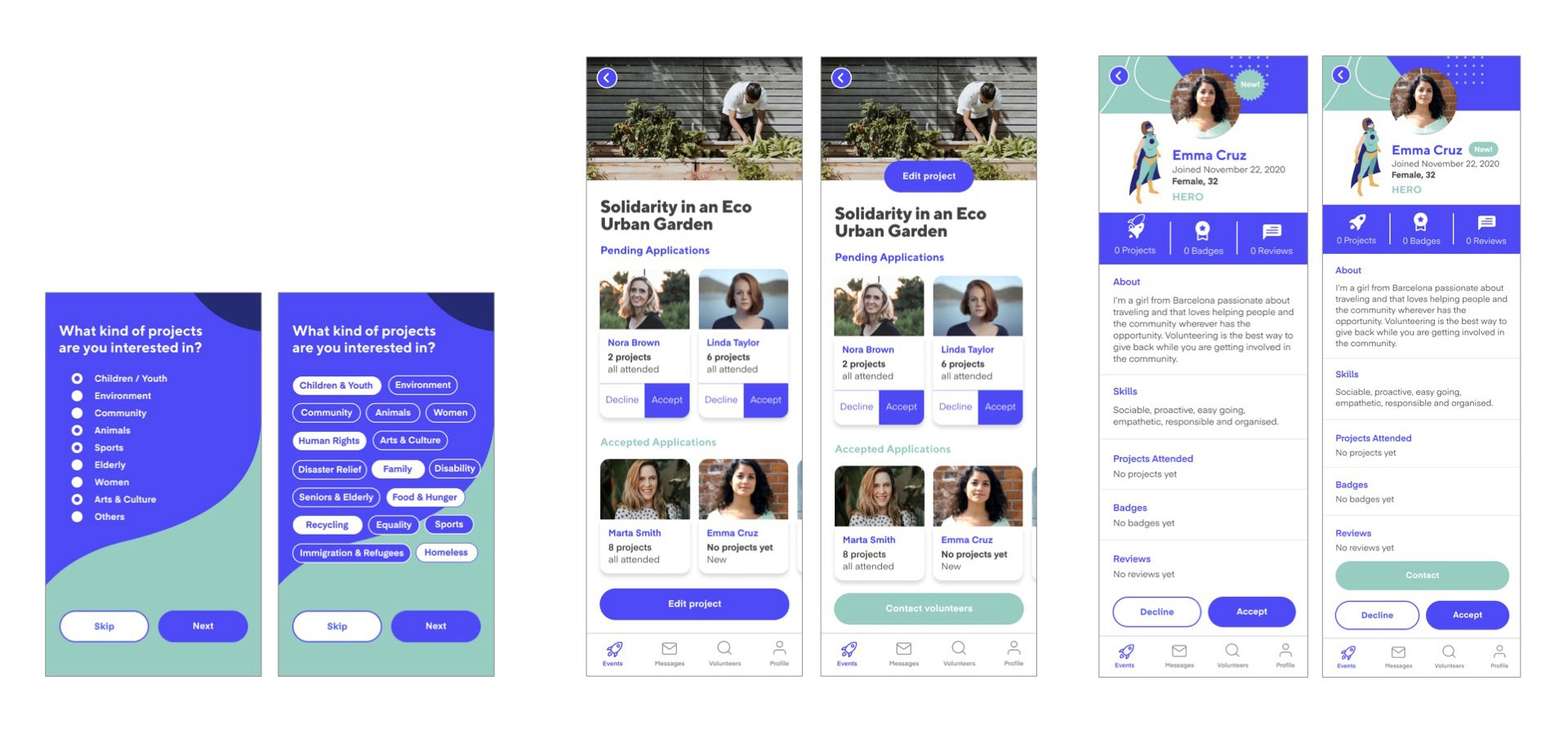
Volunteer profiles therefore became an important part of the experience, allowing organisations to understand someone's background and previous activity before accepting their application.
This created a simple loop:
Discover → Apply → Review → Accept → Participate

From insight to product
I explored the experience through sketches, wireframes and task flows before moving into the visual design.
The information architecture was built around the two primary users — Volunteers and Organisations — with different capabilities depending on their needs.
For volunteers, the focus was discovery and participation.
For organisations, it was creating opportunities and managing applications.
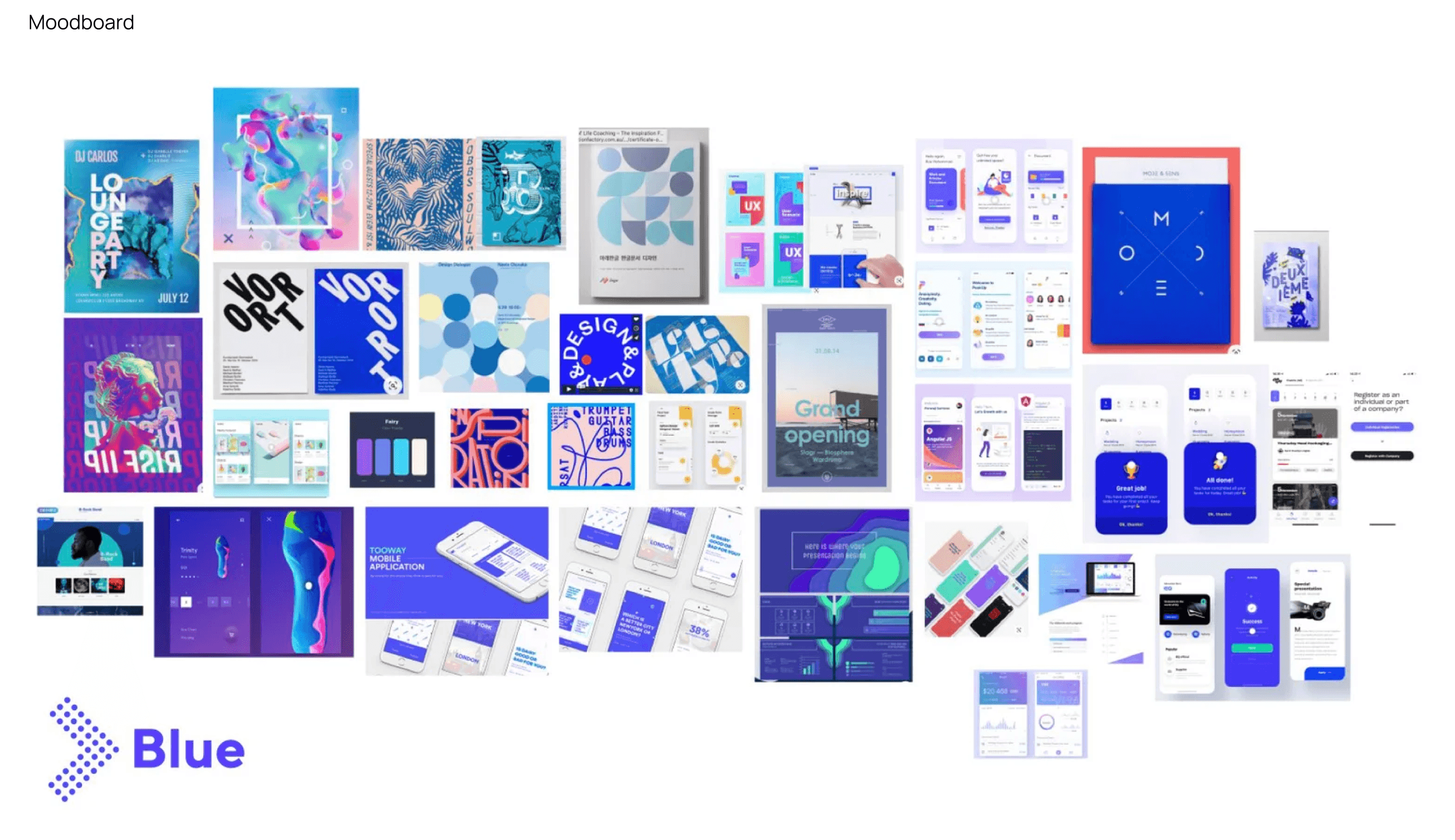
The visual direction was intentionally fresh, approachable and optimistic, using blue as a key colour to reinforce associations with trust and openness.
The final product brought together:
Short-term volunteering opportunities
Organisation profiles
Volunteer profiles
Project details
Application flows
Notifications
Location and timing information
The goal was to make volunteering feel less like a formal commitment and more like something people could easily fit into their existing lives.




Final Design
The final experience brings together discovery, trust and effortless participation in one place. Volunteers can explore opportunities based on their interests, location and availability, understand the organisation behind each project, and apply directly through the platform.
Below is a selection of the key screens that bring this experience to life.


Testing and iteration
I tested the prototype with 7 users across the different journeys.
Rather than treating testing as a final validation step, I used it to identify friction and refine the experience.
The testing focused on whether users could:
Discover a relevant volunteering opportunity.
Understand what was required.
Decide whether they trusted the organisation.
Apply without unnecessary communication.
Understand what happened after submitting an application.
The findings informed several iterations to the experience and highlighted areas that would require further development, particularly around filtering, discovery and trust.

Final Prototype
The first version of the experience gave me a strong foundation to test with users. The usability sessions revealed opportunities to simplify interactions, improve clarity and strengthen the overall experience.
I incorporated these findings into the final prototype, refining the key journeys based on what I learned from testing.
The result was a more focused experience that made it easier for volunteers to discover relevant opportunities, understand the details of a project and complete the application journey with confidence.
Explore the final experience
The prototype brings together the complete volunteer journey, from discovering an opportunity to applying and receiving confirmation.
Measuring success
Because Behelp is a two-sided platform, success needs to be measured across both sides of the marketplace.
What I would explore next
The next product iterations would focus on strengthening discovery and trust:
Immediate
More powerful filtering and sorting
Favourites
More detailed reviews
Additional volunteer journeys
Better handling of volunteers who don't attend an event
Longer term
Membership and monetisation models
Longer-term volunteering opportunities
Community-created activities beyond registered organisations
What I took from the project
Behelp reinforced the importance of challenging assumptions through research and continuously validating decisions with users.
The biggest shift came from understanding that the opportunity wasn't only about travellers — it was about making volunteering more accessible to anyone with limited time.
It taught me to focus less on designing the expected solution and more on finding the right problem to solve, testing it, and iterating based on what users actually need.